Is Your Late-Day System Failure a True Emergency?
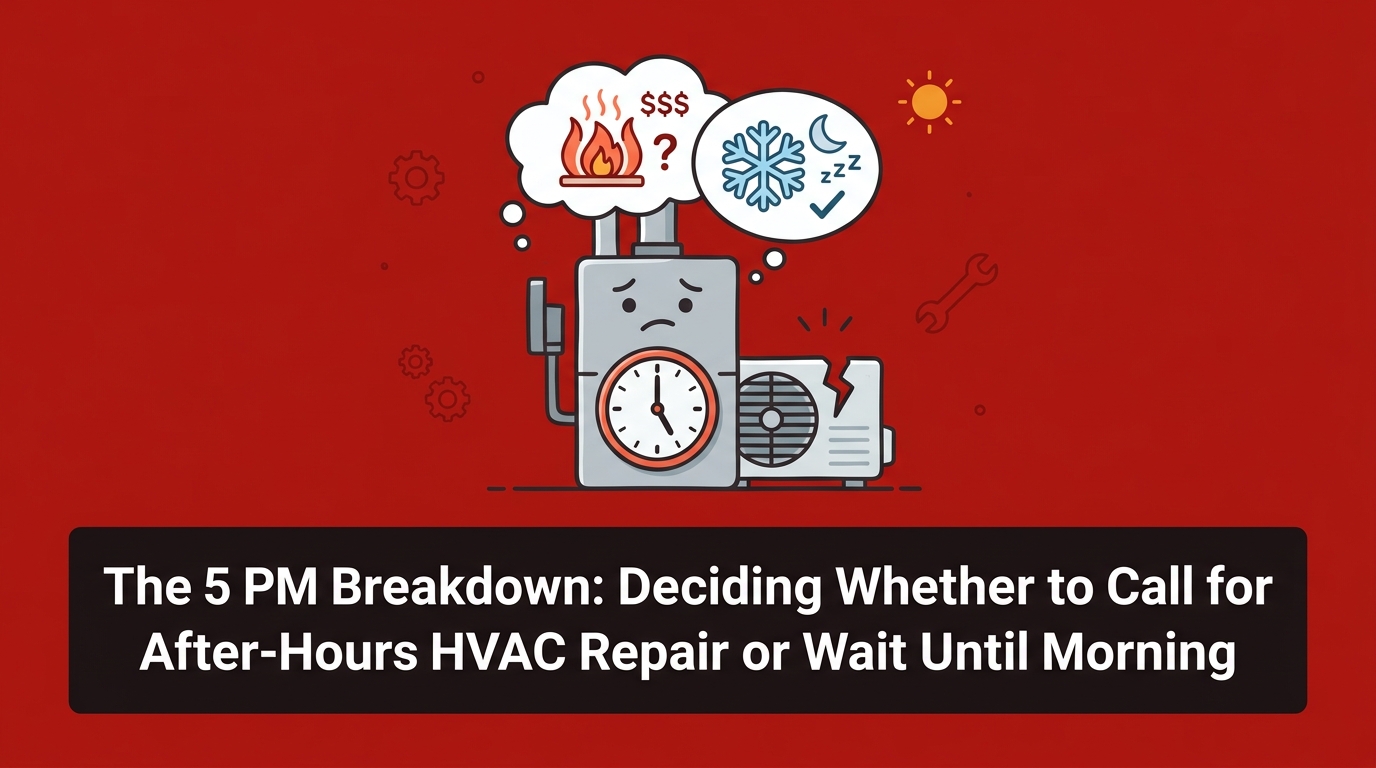
Are you staring at a warm air vent, facing The 5 PM Breakdown: Deciding Whether to Call for After-Hours HVAC Repair or Wait Until Morning? It is a highly stressful question for any homeowner. The workday is finally ending, dinner is on the stove, and you suddenly realize the house feels entirely too stuffy. You check the thermostat, and the indoor temperature is creeping up while the system runs continuously. Because regular business hours have just closed, panic often sets in immediately.
Here is the thing: a late-day system failure does not automatically mean you need a technician at your door by midnight. At Woods Family Heating & Air Conditioning, our dispatch team fields dozens of these frantic evening calls, and we always help homeowners balance actual safety risks against temporary discomfort. In many cases, turning the system off and waiting until daylight is the smarter, more cost-effective choice for your home. If you need professional support, our team handles comprehensive Air Conditioning Services to get your system back on track.
The Roanoke Climate Factor: Why Timing Matters
Your local weather plays a massive role in whether a broken HVAC system is an emergency or a mere inconvenience. During the September early fall transition in the Roanoke Valley, timing is everything. If your system fails in the middle of a scorching mid-July afternoon, the heat load inside your home can become unbearable very quickly. However, the early fall season offers a distinct natural advantage that our local technicians see firsthand.
We experience significant diurnal temperature variation during this time of year. While the late afternoon might still feel quite warm, that heat quickly dissipates after sunset. In our years of keeping Roanoke homes comfortable, we have noticed that September evenings typically cool down significantly, often dropping into the upper 50s or low 60s. This natural cooling effect means that an overnight wait is highly tolerable compared to peak summer conditions.
By simply opening a few windows and relying on natural ventilation, you can often bridge the gap comfortably until morning. Both cooling and early heating needs can fluctuate wildly during this seasonal transition. Because the outdoor temperatures are working in your favor overnight, you rarely need to rush into an emergency dispatch. If the issue turns out to be related to your furnace as the nights get cooler, you can easily arrange for heating system repair during standard hours the next day.
Safety First: When an Immediate Dispatch is Non-Negotiable
While patience is a virtue, there are strict thresholds that elevate a breakdown from a nuisance to a true safety emergency. You should never compromise when health or property is directly at risk. If your situation meets any of the following criteria, you need to schedule after-hours HVAC repair immediately.
Protecting Vulnerable Family Members
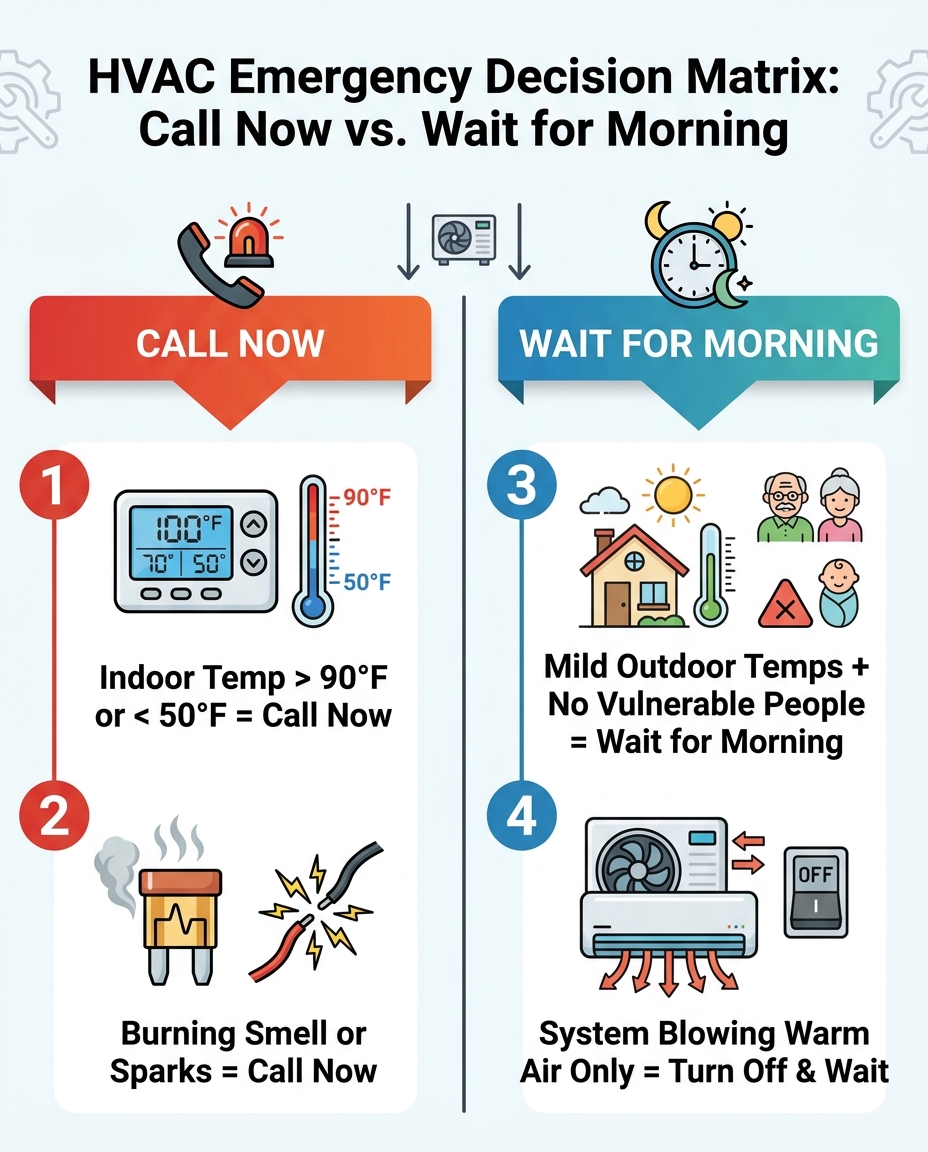
The first and most important factor is who lives inside your home. Extreme indoor temperatures affect human health rapidly, and certain individuals cannot safely endure a night without climate control. If your household includes infants, elderly family members, or individuals with specific medical conditions (such as respiratory issues or heart conditions), an extreme temperature shift is an automatic emergency.
Our safety standard at Woods Family Heating & Air Conditioning dictates that if your indoor temperature is rapidly approaching 90 degrees or dropping below 50 degrees, the environment is becoming unsafe. The body's inability to regulate temperature in these extremes can lead to severe health complications. When vulnerable people are present, do not try to tough it out.
Electrical and Fire Hazards
Beyond temperature, the physical condition of your HVAC equipment can dictate an emergency. Electrical failures are serious hazards that require immediate professional attention. One local customer recently experienced a power surge during a fall wind storm that severely damaged their boiler's electronics. Because this posed an immediate electrical risk, our on-call technician arrived the same evening with the necessary parts to resolve the hazard safely.
Watch for these critical warning signs:
• Burning smells: An odor resembling burning plastic, melting wires, or a distinct "fishy" smell often indicates melting electrical components.
• Ozone odors: A sharp, metallic smell can point to an overheating motor or severe electrical arcing.
• Sparking or smoke: Any visible smoke or sparks near your indoor or outdoor unit means you must cut the power at the breaker immediately.
• Tripping breakers: If your HVAC system trips the circuit breaker and immediately trips it again when reset, do not force it. This is a hard short circuit.
If you detect any of these electrical warning signs, turn the system off at the thermostat, flip the dedicated circuit breaker to the "off" position, and call for emergency help.
Comfort vs. Necessity: When You Can Safely Wait Until Morning
Empowering yourself to recognize the difference between a dangerous situation and a mildly uncomfortable one can save you significant stress. Most 5 PM breakdowns fall into the comfort category. Your house might feel slightly warm or a bit chilly, but if the outside temperatures are mild and your family is healthy, you have the luxury of time.
Working with Woods Family Heating & Air Conditioning means you have an honest advisor in your corner. We actively encourage our customers to wait out mild nights when safety isn't at risk, simply to help you avoid unnecessary after-hours emergency fees. We prioritize your long-term trust over a quick late-night dispatch.
Contrast a mild fall evening with a true weather emergency. For instance, our team recently received a call during the coldest night of the year when a home became completely unlivable due to a total heating failure. In that situation, our technician quickly identified the problem and restored the home to a safe temperature. But during the September early fall transition, your home is highly unlikely to reach dangerous temperature extremes overnight.
Tips for managing overnight comfort:
• Leverage cross-ventilation: Open windows on opposite sides of the house to pull cool night air through the rooms.
• Optimize ceiling fans: Ensure your fans are spinning counter-clockwise to create a cooling downdraft if the house is warm.
• Use strategic shading: Close blinds and curtains on west-facing windows before the sun goes down to block residual late-afternoon heat.
• Layer up: If you are dealing with an early fall chill, pulling out extra blankets is a simple, cost-free solution for the night.
By recognizing that your situation is a matter of comfort rather than necessity, you can get on our schedule for first thing the next morning and rest easy.
Immediate Steps to Take While You Wait
If you decide to wait until morning, you should not just leave a malfunctioning system running. Our technicians often see minor repairs turn into catastrophic, expensive failures because a broken air conditioner or heat pump was forced to operate all night. Take these actionable, safe troubleshooting steps immediately after a 5 PM failure.
1. Turn the system off at the thermostat: This is the most crucial step. If your system is blowing warm air, the compressor might be overheating, or the refrigerant lines might be frozen. Turning the thermostat to the "off" position prevents further electrical damage and protects the compressor from burning out.
2. Check the main electrical panel: Sometimes a system failure is just a tripped breaker. Locate your home's main electrical panel and check the dedicated HVAC switches. If one is tripped, you can try resetting it once. If it trips again, leave it off and wait for a professional.
3. Inspect your air filter: A severely clogged air filter restricts airflow so drastically that it can cause an air conditioner to freeze into a block of ice or a furnace to overheat and shut down on a high-limit safety switch. If the filter is caked in dust, replace it immediately.
4. Perform a basic system reset: After checking the filter and the breaker, you can see if the system recovers by safely resetting your air conditioning unit. Leave the system off for at least 30 minutes to let internal pressures equalize (and allow any ice to melt), then turn it back on. If it still malfunctions, turn it off for the night.
Side-by-Side: Emergency Dispatch vs. Morning Service
Making the final call becomes much easier when you look at the facts side-by-side. The Roanoke Valley offers a mild climate during the fall transition, giving you the flexibility to choose the best path for your schedule. Once our team has your system repaired, getting on a routine HVAC maintenance plan can help prevent these 5 PM surprises from happening in the first place.
• Response Time — Emergency After-Hours Dispatch: Technician arrives late evening or overnight. — Next-Morning Service: First available appointment during standard business hours.
• Financial Impact — Emergency After-Hours Dispatch: Premium after-hours dispatch and service rates apply. — Next-Morning Service: Standard daytime service rates apply.
• Stress & Sleep — Emergency After-Hours Dispatch: Requires staying awake late into the night waiting for repairs. — Next-Morning Service: Allows you to sleep comfortably (with windows open) and handle it fresh.
• Best Used When... — Emergency After-Hours Dispatch: Extreme indoor temperatures, vulnerable people, or electrical hazards. — Next-Morning Service: Mild outdoor weather, healthy adults, and no burning smells.

Frequently Asked Questions About After-Hours HVAC Failures
What is considered a true HVAC emergency?
A true HVAC emergency involves situations that threaten your health or property. This includes indoor temperatures rising above 90 degrees or dropping below 50 degrees, especially if elderly individuals, infants, or medically vulnerable people are in the home. Additionally, any signs of electrical failure—such as burning smells, sparking, or smoke coming from the vents or equipment—require an immediate emergency response from our on-call team.
Is it safe to sleep in a house with no AC?
Yes, it is generally safe to sleep without air conditioning as long as the indoor temperature remains moderate. During the early fall transition, outdoor temperatures drop significantly at night, allowing you to open windows and use fans to stay comfortable. Unless your home's indoor temperature is trapped at dangerously high levels, sleeping without AC for one night poses no health risk to a healthy adult.
Should I turn off my AC if it is blowing warm air?
You should absolutely turn off your air conditioner if it is blowing warm air. Leaving a malfunctioning system running can cause severe damage to the compressor or cause the indoor evaporator coil to freeze completely solid. Turn the system to the "off" position at the thermostat to protect the equipment while you wait for a Woods Family Heating & Air Conditioning technician to diagnose the root cause.
Can a broken furnace wait until morning?
A broken furnace can usually wait until morning if the outdoor temperatures are mild and your home retains enough residual heat to stay above 50 degrees overnight. By layering clothing and using extra blankets, most healthy adults can comfortably wait out a cool night. However, if a deep freeze is occurring and your pipes are at risk of bursting, you should call for emergency heating service.
Will waiting overnight cause more damage to my HVAC system?
Waiting overnight will not cause more damage to your HVAC system as long as you turn the system completely off at the thermostat. We frequently remind our customers that the real damage occurs when homeowners force a broken system to keep running, which strains the electrical components and the compressor. Once the system is powered down, it is perfectly safe to leave it idle until morning.
How can I keep my house comfortable while waiting for morning repairs?
To keep your house comfortable, rely on natural ventilation and strategic airflow. Open windows on opposite sides of your home to create a cross-breeze, and turn on ceiling fans to keep the air moving. If you are dealing with a warm house, avoid using heat-generating appliances like ovens or dryers until the HVAC system is repaired.
Make the Right Call for Your Home
Facing a late-day system failure does not have to ruin your evening. The short answer is that true emergencies—characterized by extreme indoor temperatures, vulnerable family members, or obvious electrical hazards—require immediate action. However, mild conditions and a healthy household give you the freedom to exercise patience.
You now have a practical decision framework to make an informed, confident choice about your HVAC system. By understanding your local climate and knowing how to safely turn off your equipment, you can protect your home and avoid unnecessary premium fees. Whether you determine that your situation requires an immediate after-hours dispatch or you simply need to secure a spot for first thing in the morning, the team at Woods Family Heating & Air Conditioning is ready to restore your comfort.