The First Chill: Evaluating Your Heating System's Fall Startup
Before the first chilly October night arrives, you need reliable home maintenance tips and troubleshooting strategies to prepare your heating system for the season ahead. When the temperature drops in the valley and you finally flip that thermostat switch from "cool" to "heat," a familiar anxiety often sets in. You might be greeted by a strange burning odor, or perhaps the equipment starts making unfamiliar mechanical groans that echo through the vents. At Woods Family Heating & Air Conditioning, we know that for many homeowners, this initial startup feels like a guessing game between a harmless seasonal quirk and a serious mechanical failure.
Understanding what happens inside your equipment during this seasonal shift is the key to protecting your home. A system that has sat dormant for months will naturally experience a brief adjustment period when it fires up again. However, ignoring the wrong symptom can lead to a sudden breakdown when the deep winter freeze sets in. By observing your system proactively right now, you can distinguish between normal operation and a genuine safety hazard. If you notice signs of true mechanical distress, securing professional HVAC services early ensures you are not left waiting in a freezing house later. Proactive heating repair and maintenance during the autumn transition is the most effective way to guarantee reliable performance all winter long.
Why the Blue Ridge Climate Stresses Your Home's Comfort Systems
In our years of serving the Roanoke Valley and Blue Ridge area, our team has seen firsthand how local geography creates unique weather patterns that place exceptional wear and tear on your home's comfort systems. During the autumn months, it is incredibly common to experience significant diurnal temperature variations. You might face a sunny, humid afternoon that requires cooling, followed rapidly by a sharp temperature drop that mandates heating by midnight. This rapid oscillation forces your equipment to work double-duty, constantly shifting gears to maintain a consistent indoor environment.
Rapidly alternating between cooling during the day and heating at night places exceptional mechanical strain on system components. For heat pumps, the reversing valve must physically shift the flow of refrigerant back and forth. This constant switching can actually mask underlying mechanical stress. A system might struggle slightly during the night but recover during the day, hiding a growing problem until the weather turns permanently cold and the unit is forced to run heating exclusively. Because of this dual demand, we always recommend checking both cooling and heating functions during this transition period. If a component begins to fail under this heavy workload, timely air conditioning repair or heating adjustments can prevent a total system lockout.
The 24-Hour AC-to-Heat Cycle
The impact of humidity and frost: Daytime humidity followed by nighttime frost impacts the exact same outdoor unit. The coils must continuously manage moisture removal in the afternoon and then defend against frost buildup a few hours later.
The mechanical toll: Reversing the refrigerant flow frequently requires the compressor and internal valves to work significantly harder than they do during a steady, single-season climate.
Decoding the 'Burning Dust' Smell: Normal Burn-Off vs. Hazard
One of the most common calls our dispatchers at Woods Family receive on that first chilly October night is from a homeowner alarmed by a sudden burning smell spreading through their house. To understand why this happens, you have to look at what occurs during the off-season. Throughout the long summer months, microscopic particles of dust, pet dander, and airborne debris settle onto your furnace's heat exchanger and internal heating elements. When the system ignites for the first time, these settled particles are instantly incinerated.
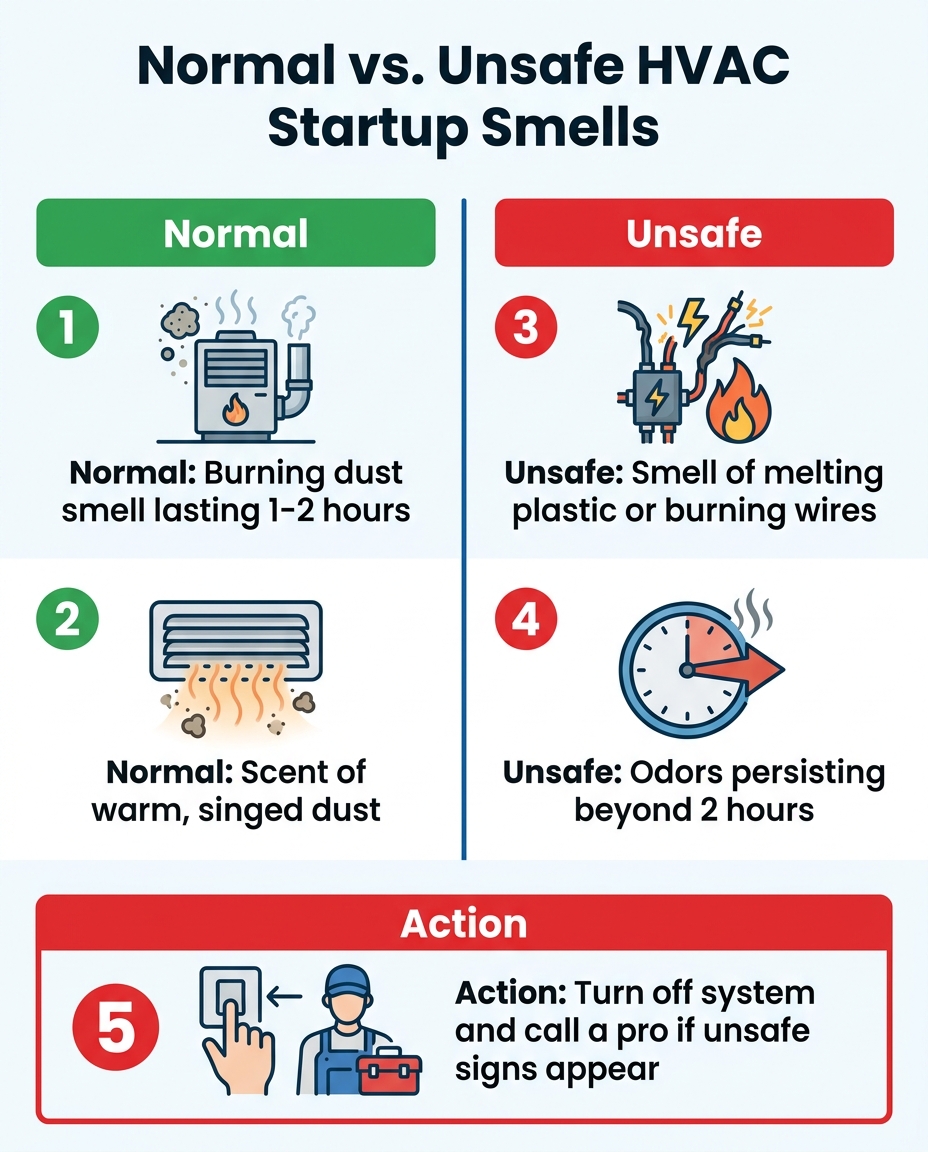
According to guidelines from the Department of Energy and the National Fire Protection Association (NFPA), a burning dust smell is typically completely normal for the first one to two hours of operation. The scent is often described as resembling singed hair or warm, dry dust. It should not smell like melting plastic or acrid smoke. We advise homeowners to monitor the system closely during this initial window rather than leaving the house. Open a few windows to help ventilate the space, and pay attention to how the odor changes over time.
Timeline of a Normal Startup
• 0 - 30 Minutes — Expected Odor Level: Strongest odor. The primary layer of settled dust is actively burning off the heat exchanger. — Required Action: Monitor the system. Open windows if the smell is overwhelming.
• 30 - 120 Minutes — Expected Odor Level: Odor dissipates gradually. The smell should become noticeably fainter. — Required Action: Continue observing. Ensure smoke alarms are not triggered by actual smoke.
• Beyond 2 Hours — Expected Odor Level: Smell persists or grows stronger. — Required Action: Shut the system down immediately at the thermostat and call for professional diagnostics.

Troubleshooting Heat Pump Noises and Performance Issues
Beyond unusual smells, the transition to heating mode often brings a symphony of new sounds. If you live in the Roanoke Valley and Blue Ridge area, your heat pump will make several distinct noises as it adjusts to the dropping temperatures. Normal sounds include a noticeable "whoosh" when the reversing valve shifts the refrigerant flow, or a minor clicking sound from the thermostat as it signals the equipment to turn on. These are simply the sounds of heavy machinery doing its job.
However, abnormal sounds require immediate attention. Grinding metal, loud banging, or a continuous rattling suggests loose components, failing blower motors, or fan blades striking their housing. Another major red flag is a system that blows cold air despite the thermostat being set to heat. Just last fall, our team responded when a local homeowner reached out over a holiday weekend because their heat pump started blowing only cold air during a particularly cool night. Our technician arrived promptly, found two small mechanical issues preventing the heating cycle from engaging, and restored the warmth within a couple of hours. Diagnosing these specific mechanical failures requires a licensed professional, and you should never attempt DIY disassembly of the unit. Instead, rely on expert heat pump services to safely evaluate the internal components.
When the Air Stays Cold
• Thermostat check: Always verify your thermostat is actually set to "heat" and that the set temperature is higher than the current room temperature before assuming a breakdown.
• Defrost cycle: Heat pumps occasionally blow cooler air while running a brief defrost cycle to melt frost off the outdoor coils. This should only last a few minutes.
• Stuck valves: If the air stays cold for an extended period, the reversing valve or auxiliary heating strips may be stuck or malfunctioning.
Electrical Smells and Unmistakable Safety Red Flags
While a brief dusting-off scent is expected on that first chilly October night, you must draw a hard line between normal seasonal quirks and dangerous situations. Electrical odors are an unmistakable safety red flag. You must contrast the mild scent of warm dust with the sharp, acrid smell of melting plastic, burning wires, or the distinct metallic scent of ozone. These dangerous smells indicate that something inside the cabinet is actively failing under electrical load.
In our experience, electrical odors typically point to overheating blower motors, failing capacitors, or compromised wiring harnesses that have rubbed bare over time. The National Fire Protection Association (NFPA) strongly recommends annual heating system inspections specifically to catch these exact issues before they escalate into fire hazards. If you smell burning plastic or wires, you must take immediate action to protect your home. Turn off the system at the thermostat immediately, and then shut off the power at the main circuit breaker to ensure no electricity is flowing to the compromised unit.
Immediate Shutdown Triggers
• Persistent smells: Any burning odor that lasts beyond the two-hour mark, regardless of what it smells like.
• Visible signs: Smoke, sparking, or soot appearing near the indoor air handler or vents.
• Electrical trips: A system that repeatedly trips the circuit breaker when it tries to turn on is experiencing a dangerous electrical short.
Navigating Heat Pump Quirks and System Alerts
Modern HVAC technology has advanced significantly, and today's thermostats and heat pumps often communicate directly with homeowners when they detect internal stress. If you reside in the Roanoke Valley and Blue Ridge area, your digital thermostat might display specific alert codes, a "check system" light, or a flashing warning when it senses a problem. Interpreting these alerts early can save significant diagnostic time and prevent a minor issue from snowballing into a major repair.
One of the most common physical alerts our technicians see is rapid cycling—turning on and off too quickly without ever reaching the desired temperature. This behavior is a cry for help from the system's internal sensors, indicating that the unit is overheating, struggling with airflow, or failing to maintain proper refrigerant pressure. When your system behaves erratically or displays an unusual code, you do not have to guess what it means. You can easily direct yourself to lateral resources for decoding heat pump error codes to understand exactly what your equipment is trying to tell you.
Why Prompt Action Prevents Deep-Winter Breakdowns
Ignoring early warning signs during the autumn transition is a gamble that rarely pays off. A minor issue noticed on the first chilly October night—like a struggling capacitor or a slightly loose fan belt—will inevitably fail under the heavy, continuous load of a deep freeze. When temperatures plummet, your system works at maximum capacity, and any weakened component will snap under the pressure.
The discomfort and risk of dealing with an emergency heating loss on the coldest day of the year cannot be overstated. During one particularly brutal winter stretch, our team responded to a local family facing an emergency heating issue that made their home completely unlivable. Because they reached out to our trusted local technicians, we quickly identified the problem based on our extensive experience, secured the necessary part that same day, and restored a livable temperature. This highlights the immense value of a proactive pre-winter inspection. The Woods Family commitment to honest diagnostics means helping anxious homeowners feel safe asking for an inspection without the fear of aggressive upselling. Addressing these minor quirks now ensures your home remains a safe, warm haven all season long.
Frequently Asked Questions About Fall Heating Startup
Why does my heater smell like burning when I turn it on?
Your heater smells like burning because dust and debris that settled on the heat exchanger over the summer are being incinerated. This is a normal process that occurs the first time the system runs each fall. As long as the scent resembles warm dust and not melting plastic, it is typically harmless.
How long should a furnace smell like burning dust?
A furnace should only smell like burning dust for the first one to two hours of operation. After this initial burn-off period, the odor should dissipate completely. If the smell persists beyond two hours, you should shut the system down and call for professional diagnostics.
What noises are normal for a heat pump in winter?
Normal noises for a heat pump include a "whooshing" sound when the reversing valve changes the refrigerant flow, and a humming sound from the compressor. You might also hear brief clicking from the thermostat. However, loud banging, grinding, or metal-on-metal screeching are abnormal and require immediate attention.
When should I call a professional for furnace repair?
You should call a professional if you smell burning plastic or electrical ozone, if the system makes loud grinding noises, or if it repeatedly trips your circuit breaker. Additionally, if your system blows cold air while set to heat, a licensed technician needs to evaluate the internal components.
How do I know if my furnace is safe to run after sitting idle?
The best way to know if your furnace is safe to run is to schedule an annual pre-winter inspection with a certified technician. They will check the heat exchanger for cracks, verify electrical connections, and ensure all safety sensors are functioning correctly before the heavy heating season begins.
Can switching between AC and heat damage my HVAC system?
Switching between AC and heat frequently in the Roanoke Valley and Blue Ridge area places extra mechanical stress on your system's reversing valve and compressor. While modern heat pumps are designed to handle this, rapid switching can accelerate wear and tear, making routine maintenance essential to prevent premature failures.
Securing Peace of Mind for the Winter Ahead
As the first chilly October night approaches, understanding your heating system's startup behavior is essential for protecting your home. While a temporary burning dust smell and a few mechanical whooshes are perfectly normal, persistent acrid odors, grinding noises, and a lack of warm air are clear signals that your equipment needs help. You do not have to navigate these warning signs alone or worry about hidden safety hazards.
A trusted local expert from Woods Family Heating & Air Conditioning can quickly identify and resolve these hidden stresses before the heavy winter weather arrives. By addressing minor performance issues now, you secure the reassurance that your system will operate safely and efficiently when you need it most. Schedule a professional inspection today to ensure your home remains comfortable and safe throughout the freezing months ahead.