The First November Freeze: Why Your Heat Pump Might Suddenly Blow Cold Air
Your heat pump has been running smoothly all day, but as you walk past a vent, you feel a distinct chill instead of a wave of warmth. That strange blast of cold air isn't going away on its own, and the immediate panic of a broken heating system quickly sets in. When facing sudden temperature drops, turning to local service expertise and area tips can help you figure out if your system is actually broken or simply doing its job. Whether you are looking to troubleshoot a sudden heating glitch or optimize your overall air conditioning services for year-round comfort, knowing what to watch for is your first line of defense.
As the transition into late fall begins, the first overnight temperature drops into the 30s can trigger unexpected behavior from your heating equipment. At Woods Family Heating & Air Conditioning, our team typically fields a wave of panic calls during that November first freeze when homeowners' vents suddenly push cool air into the living room. It is completely natural to assume the worst and reach for the phone to call for emergency repairs. However, in our experience, temporary cool air might actually be a completely normal system operation rather than a mechanical breakdown.
Our goal with this guide is to help you differentiate between a heat pump that is functioning exactly as designed and a true emergency that requires a professional service call. Understanding how your system reacts to freezing weather ties directly into your broader home comfort strategy. When you know what is happening behind the scenes, you can avoid unnecessary panic, save money on unneeded service visits, and keep your household perfectly comfortable as we head into the holiday season.
Understanding the Heat Pump Defrost Cycle
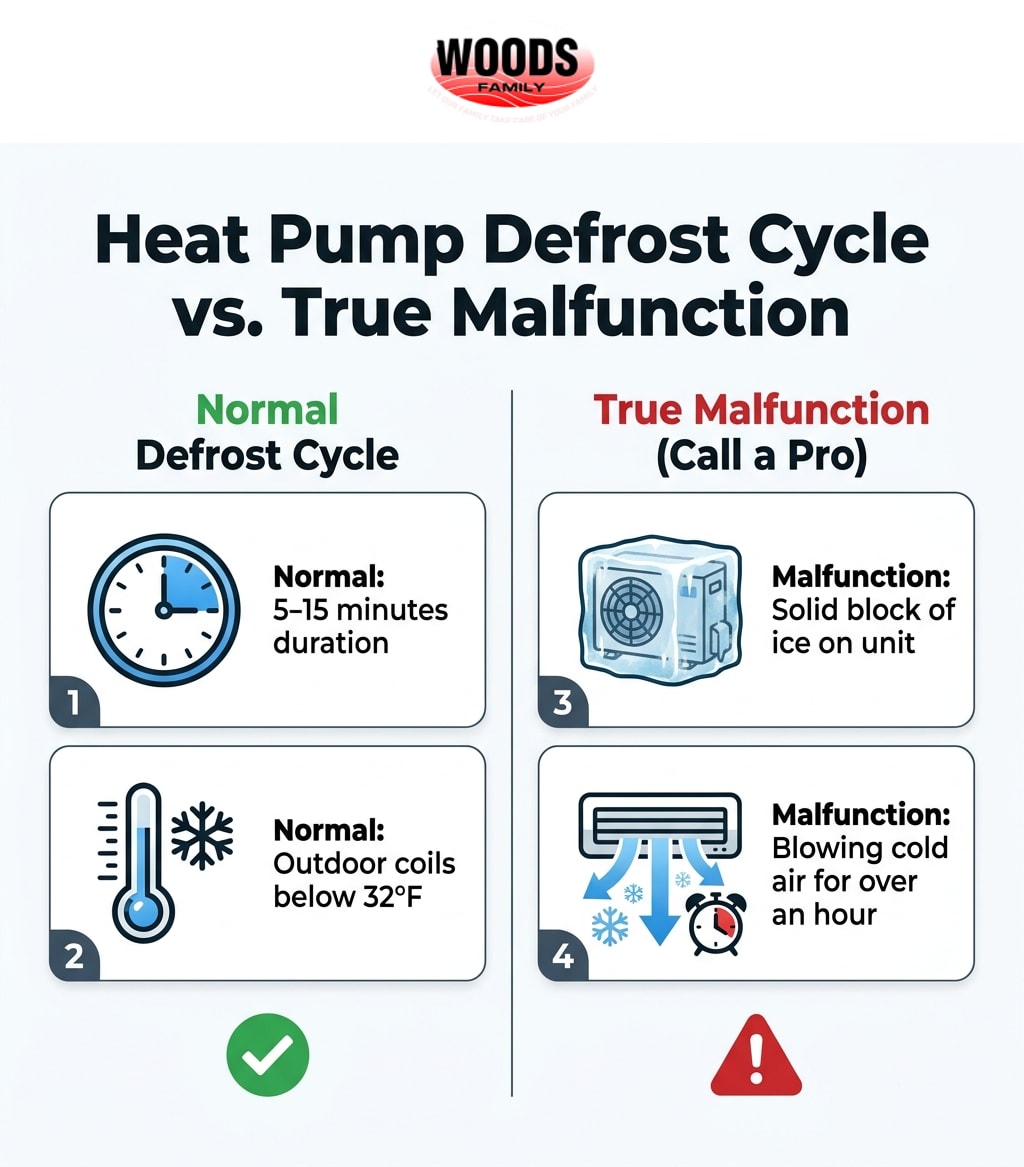
To understand why your vents might temporarily blow cold air, you first need to understand how your system gathers heat. Heat pumps do not generate heat like a gas furnace; instead, they extract ambient heat from the outside air and transfer it inside your home. However, when late fall arrives and outdoor coils drop below 32 degrees Fahrenheit, the moisture in the air naturally condenses and freezes on the equipment. This causes frost to accumulate on the outdoor unit's coils.
If left unchecked, this frost would eventually turn into a solid block of ice, suffocating the system and preventing it from pulling in any heat at all. To prevent this dangerous ice buildup, your system is equipped with a built-in defense mechanism called the defrost cycle. When sensors detect too much frost, the system temporarily reverses its operation to melt the ice away. During this cycle, the system is essentially operating in cooling mode. It takes the warm air from inside your house and sends it back out to the outdoor coils to melt the frost. Because the system is temporarily running in reverse, your indoor vents may blow cool air for a short period.
In our experience across Roanoke, a normal defrost cycle is entirely temporary. It typically lasts between 5 and 15 minutes, depending on how much ice has accumulated and how cold the outdoor temperature is. Once the sensors detect that the outdoor coils are clear of frost, the system shifts back into its normal heating mode, and warm air will once again flow through your vents.
How the Reversing Valve Works
The magic behind this seamless transition is a small but critical component called the reversing valve. This valve is responsible for the mechanical shift that redirects the flow of warm refrigerant. In heating mode, the hot refrigerant flows indoors to warm your home. When the defrost cycle triggers, the reversing valve physically shifts, sending that hot refrigerant directly to the outdoor unit instead.
You might also notice that the outdoor fan usually stops spinning during this phase. This is an intentional design feature. By stopping the fan, the system prevents cold outside air from blowing across the coils, allowing the redirected heat to accelerate the melting process. Ensuring this valve and the associated sensors are working correctly is a key part of any routine HVAC maintenance plan.
Normal Defrosting vs. True System Malfunctions
When the temperature drops and your system starts acting strangely, having a clear checklist can help you diagnose the behavior before panicking. Our technicians often remind homeowners that it is very easy to confuse a routine defrost cycle with a serious mechanical failure, especially if you have never noticed the process before. Knowing the specific signs to look for will give you peace of mind and help you decide your next steps.
Signs of a normal defrost cycle: You might see steam rising from the outdoor unit as the hot refrigerant melts the frost. This steam is often mistaken for smoke, but it is completely harmless water vapor. You may also notice a blinking indicator light on your thermostat, letting you know the system is in defrost mode. Most importantly, the entire process should resolve itself in under 15 minutes.
Signs of a true malfunction: If the outdoor unit becomes encased in a solid block of ice that does not melt away, the defrost cycle is failing. Additionally, if cold air blows continuously from your indoor vents for over an hour without the system recovering, you have a legitimate problem. You should also listen for strange grinding, rattling, or shrieking noises coming from the compressor, which indicate mechanical stress rather than a routine cycle.
• Duration of Cold Air — Normal Defrost Cycle: 5 to 15 minutes — System Malfunction: Continuous for over an hour
• Outdoor Unit Appearance — Normal Defrost Cycle: Light frost melting into steam — System Malfunction: Encased in a solid, thick block of ice
• Outdoor Fan Activity — Normal Defrost Cycle: Fan stops temporarily to melt ice — System Malfunction: Fan runs but unit remains frozen solid
• Unusual Noises — Normal Defrost Cycle: A brief "whoosh" when reversing valve shifts — System Malfunction: Loud grinding, shrieking, or heavy rattling
• Thermostat Status — Normal Defrost Cycle: May show a blinking auxiliary or defrost light — System Malfunction: System cannot reach set temperature at all
If you observe the signs of a malfunction, it might be time to take action. Sometimes, a simple system reset can clear a minor electronic glitch, which is why understanding how to reset your air conditioning unit can be helpful. However, if the system remains frozen or continues blowing cold air after a reset, you need professional assistance.
Why Choosing an Honest HVAC Company Matters
The confusion surrounding the heat pump defrost cycle perfectly highlights the importance of contractor integrity. Every winter, many homeowners mistakenly request emergency service for normal defrosting out of sheer panic. When the house feels chilly and the outdoor unit is blowing steam, the immediate reaction is to call for help. This is exactly where the character of your chosen service provider becomes critical.
At Woods Family Heating & Air Conditioning, we believe a reputable HVAC company should always help you troubleshoot basic symptoms over the phone first. When you call us in a panic about cold air coming from your vents, our dispatchers and technicians will ask you how long it has been happening and whether the outdoor fan has stopped. We will walk you through the signs of a defrost cycle and advise you to wait 15 minutes to see if the system recovers. This simple act of honesty saves you from paying an emergency dispatch fee for a system that isn't actually broken.
Unfortunately, dishonest contractors might exploit early winter panic for a quick, unnecessary service fee. They may rush a technician to your home, perform a "diagnostic" on a perfectly functional system, and charge you for an emergency weekend visit. Working with our family-owned team means we prioritize customer education over unnecessary truck rolls. We want to build a long-term relationship based on trust, not capitalize on a momentary misunderstanding of how your equipment works.
Education empowers homeowners to make informed decisions about their home systems. When your contractor takes the time to explain the mechanics of your heat pump, you become a more confident homeowner. You learn to recognize the normal rhythms of your home, and you know exactly who to trust when a real emergency finally does occur.
Key Traits of a Dependable Local Contractor
When the time comes that you actually need professional help, knowing how to select the right contractor is essential. Not all service providers deliver the same level of expertise or customer care. To protect your home and your wallet, you should evaluate potential companies based on a few critical criteria before an emergency strikes.
1. Verify proper licensing, insurance, and manufacturer certifications: A dependable contractor will gladly provide proof that they are licensed to operate in your state and fully insured to protect your property. Manufacturer certifications, such as NATE (North American Technician Excellence), indicate that their technicians have undergone rigorous, specialized training to handle complex modern systems.
2. Look for a strong track record of verified local reviews: Word of mouth and local reputation matter immensely. Look for a company with a long history of positive, verified reviews from homeowners in your specific area. Consistent praise for punctuality, honesty, and clean workspaces is a strong indicator of how they run their business.
3. Ensure they offer transparent communication and upfront diagnostics: You should never be surprised by a final bill. A trustworthy professional will thoroughly diagnose the problem, explain the root cause in plain language, and provide a clear, upfront estimate before any actual work begins. They will answer your questions patiently rather than pressuring you into a quick decision.
4. Confirm they have 24/7 emergency availability: Real breakdowns rarely happen on a convenient schedule. When your system fails on a freezing holiday weekend, you need a contractor who offers true round-the-clock emergency availability to restore your home's safety and comfort promptly.
The Value of Roanoke Valley Climate Expertise
When dealing with complex heating systems, general knowledge is good, but local knowledge is absolutely crucial. The unique regional climate of our area demands systems that can handle both hot, humid summers and freezing winter nights. A contractor who intimately understands the weather patterns of the Roanoke Valley is far better equipped to diagnose, repair, and properly size your home's equipment.
The Roanoke Valley's moderately cold winters make heat pumps highly efficient, but they are also prone to frequent icing and defrosting compared to warmer parts of Virginia. A technician who lacks local experience might misdiagnose frequent defrost cycles as a mechanical flaw, whereas our local experts at Woods Family Heating & Air Conditioning know exactly how the valley's specific humidity and temperature drops affect outdoor coils. Having served this area for years, we also understand local building codes, traditional housing styles, and the common regional wear-and-tear patterns that affect ductwork and insulation.
Familiarity with the area means our technicians arrive prepared with the right parts for seasonal transitions. Because we know that the first major freeze always brings a wave of sensor failures or reversing valve issues, our trucks are fully stocked to handle those exact problems on the first visit. This local preparedness minimizes your downtime and gets your home warm again faster.
Properly functioning systems also support better indoor environments. When a local expert calibrates your system to handle the specific humidity and temperature swings of the valley, they aren't just fixing the heat—they are setting the stage for comprehensive indoor air quality improvements that keep your family breathing easier all year long.
When It's Time to Call for Professional Heating Solutions
While understanding the defrost cycle can save you from unnecessary panic, there are definitive moments when you must stop monitoring the system and call in the experts. If the heat isn't recovering after a defrost cycle and the house temperature continues to drop steadily, your system has likely suffered a mechanical failure. A reversing valve that gets stuck in cooling mode, a failed outdoor fan motor, or a broken defrost control board will completely halt your home's heating capabilities.
You should also immediately call for help if your vents continuously blow cold air during freezing nights, regardless of how high you set the thermostat. This indicates that the system is completely starved of refrigerant or the compressor has failed. In these moments, the importance of prompt, honest response times during holidays or weekends when temperatures plummet cannot be overstated. Waiting out a severe freeze without a working heating system can lead to frozen pipes and serious property damage.
A pattern we see often during late fall holiday weekends is sudden system failure right when you need it most. For example, one local homeowner reached out to us over a chilly Thanksgiving weekend when their heat completely stopped working and the vents were only blowing cold air. Because temperatures were dropping fast, our technician responded quickly to check the system. Instead of pushing for a massive, unnecessary replacement, our team relied on years of experience to find and fix two small issues, restoring the heat within hours. This is the exact level of care you should expect from your local experts.
Relying on experienced technicians to find and fix small issues before they become major failures is the smartest way to manage your home. Whether you need a simple sensor replaced or comprehensive professional heating solutions, making the call at the right time ensures your home remains a safe haven against the cold.
Navigate Winter Confidently with the Right HVAC Partner
Understanding the normal behavior of your heat pump provides incredible peace of mind when the winter weather turns harsh. Knowing that a brief blast of cold air is often just your system protecting itself from ice buildup empowers you to stay calm and avoid unnecessary service fees. However, when real trouble strikes, that knowledge must be paired with action.
We cannot overstate the value of having a trustworthy, honest contractor on speed dial before the freezing temperatures arrive. When you partner with Woods Family Heating & Air Conditioning, you get a reliable team that prioritizes your education and comfort over a quick sale, so you never have to second-guess the advice you receive. We encourage you to explore proactive care options and schedule a thorough system check with us to ensure your equipment is fully prepared for the coldest months ahead.
Frequently Asked Questions
Why is my heat pump blowing cold air in winter?
Your heat pump is likely going through its normal defrost cycle to melt ice off the outdoor coils. During this process, the system temporarily reverses its flow, acting like an air conditioner for a few minutes. Once the ice is melted, it will automatically switch back to providing warm air to your home.
How long does a heat pump defrost cycle last?
A typical defrost cycle lasts anywhere from 5 to 15 minutes. The exact duration depends on the outdoor temperature and the amount of frost buildup on the coils. If your system continues to blow cold air for more than an hour, it is experiencing a malfunction and requires professional attention.
Is it normal for a heat pump to have frost on it?
Yes, it is completely normal for a light layer of frost to form on the outdoor unit when temperatures drop below 32 degrees Fahrenheit. The system is designed to handle this by automatically triggering a defrost cycle. However, if the unit becomes encased in a thick, solid block of ice, the defrost mechanism has failed.
How do I know if I need to call an HVAC company for my heat pump?
You should call a professional if your vents blow cold air continuously for over an hour without recovering. Other warning signs include loud grinding or shrieking noises, a solid block of ice on the outdoor unit, or a thermostat that cannot reach your set temperature. An honest technician will help you verify these symptoms before dispatching a truck.
Will preventative maintenance stop my heat pump from freezing completely?
Preventative maintenance cannot stop frost from forming, as condensation and freezing are natural physics when extracting heat from cold air. However, routine maintenance ensures that your system's sensors, reversing valve, and defrost control board are functioning perfectly. This guarantees that when frost does form, your system can melt it away efficiently without suffering a breakdown.